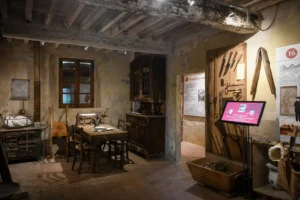


It’s raining. You’re in Parma, you had planned a day exploring dairies and the countryside, and the weather has other ideas. The good news is that the province has the perfect answer: a network of museums, each dedicated to one of the products that have made this area famous around the world. Forget miniature displays and endless information panels. These museums occupy historic dairies, Benedictine monasteries, castles and even former prisons, all telling the story of how the Food Valley came to be.
The less convenient news — and something nobody tells you beforehand — is that not all of these museums are open every day. So let’s start there, because this is the detail that determines whether your rainy-day plan will actually work.
1. The rule that changes everything: visit on the weekend
The Food Museums of the Province of Parma follow a seasonal calendar: they open at the end of February and close on December 8. During the season, they are open to the public on Saturdays, Sundays and public holidays, from 10:00 am to 6:00 pm. No reservation is required.
This means that the classic “it’s raining on Tuesday, let’s go to a museum” solution doesn’t really work here, except for organized groups and visits arranged by appointment. If your free day falls during the week, there are better alternatives: visits to Parmigiano Reggiano dairies and Parma Ham producers, for example, take place almost entirely indoors and are available every day.
The seasonal exception: the Porcini Mushroom Museum in Borgotaro is open every day during July, August and September — Monday through Friday from 9:30 am to 12:30 pm and 3:30 pm to 6:00 pm, and weekends and public holidays from 10:00 am to 6:00 pm.
Always check before setting off: the museums sometimes have special openings during local festivals, and schedules can change from year to year. The official website and online ticket office are the sources to check, rather than printed guidebooks.
2. Nine museums and a tenth spread across the city: the map
The project began in 2000 as an initiative of the Province of Parma, with the idea of creating a permanent record of the area’s most important food products. It started with four locations and has grown to nine museums, each dedicated to a particular product, plus a tenth “diffused” museum spread across Parma’s historic center.
Their geographical distribution is no coincidence: each museum is located where its product originates. The circuit stretches from the lowlands along the Po River to the ridges of the Apennines. Following it means traveling through the entire province — effectively turning the museum circuit into a journey through the territory itself.
One figure puts its scale into perspective: by December 31, 2023, the network had welcomed more than 337,000 visitors, with over 4,700 objects on display and 45 educational workshops. These are far from improvised collections.
3. From the Great River: Parmigiano Reggiano and Culatello
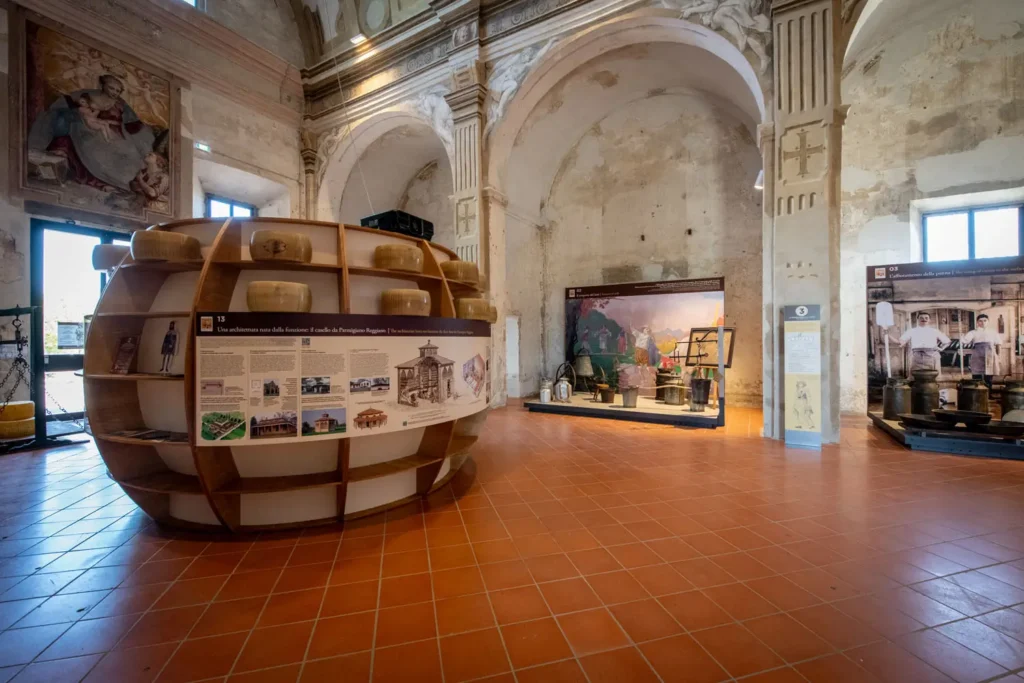
Parmigiano Reggiano Museum — Fontevivo. A word of warning here, because many guides still list Soragna as its location: since June 13, 2026, the museum has had a new home in Fontevivo, at Piazza Convento 1, next to the Cistercian Abbey of San Bernardo. The collection brings together tools, documents and photographs from the five provinces where Parmigiano Reggiano is produced, reconstructing the cheesemaker’s craft between the nineteenth and twentieth centuries. If you have read about the difference between Parmigiano Reggiano and Grana Padano, here you can see that history through actual objects: copper vats, traditional curd cutters, cheesemaking paddles and molds.
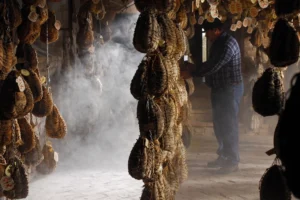
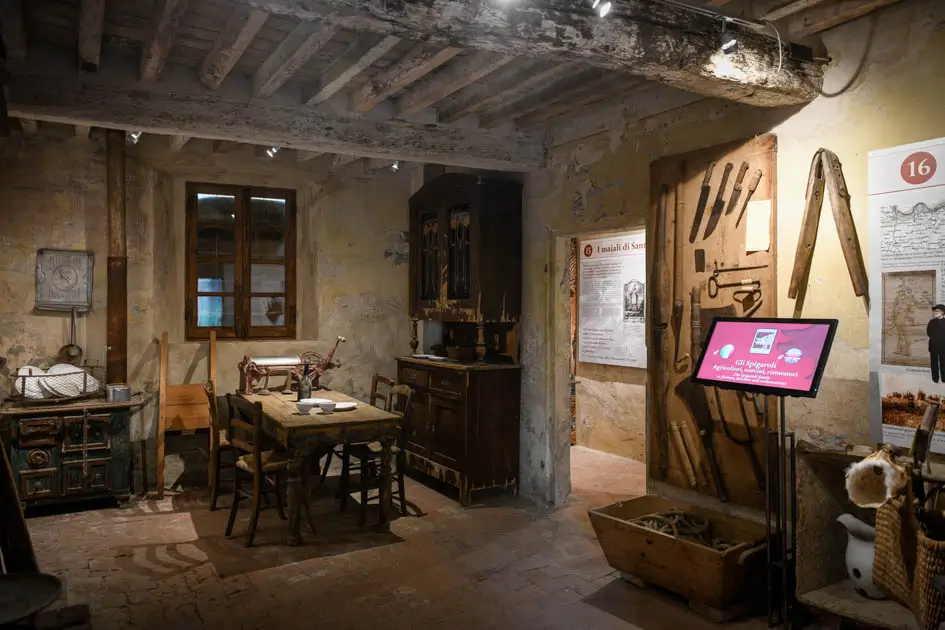
Culatello and Masalén Museum — Polesine Parmense. Located inside Antica Corte Pallavicina overlooking the Po River, the museum was conceived by the Spigaroli brothers and joined the network in 2019. It tells the story of Culatello and the role played by the fog, as well as that of the masalén, the traditional pork butchers who passed down the craft of processing pork from generation to generation. The highlight is the aging cellar: it’s the part that words cannot really describe — you have to smell it.
4. In Collecchio: Pasta and Tomato at the Corte di Giarola
About ten kilometers from Parma, on the banks of the Taro River, Corte di Giarola is a Benedictine agricultural complex dating back to around the year 1000, built along the route of the Via Francigena. Over the centuries it served as an agricultural center, stable, dairy and — from the nineteenth century onward — tomato-processing factory. Today it houses two museums under the same roof, making it the most efficient stop on the circuit.
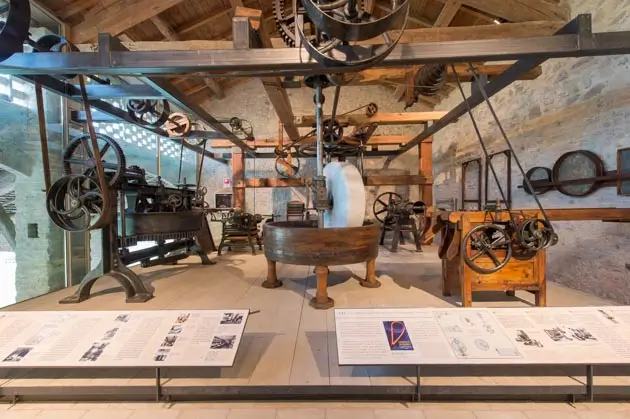
Pasta Museum. The journey goes from the grain of wheat to milling, from domestic tools to industrial production, which found one of its greatest expressions in Parma. There is an actual mill, as well as a route in Italian Sign Language for deaf visitors.
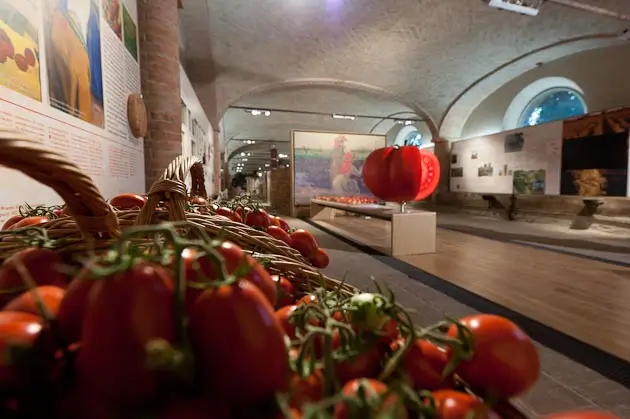
Tomato Museum. The story of the area’s “red gold”: cultivation techniques, machinery and the canning industry that grew from this province and reached markets around the world. It is perhaps the most surprising museum for visitors who arrive thinking Emilia is all about cheese and cured meats.
5. In the hills: Salami, Prosciutto and Wine
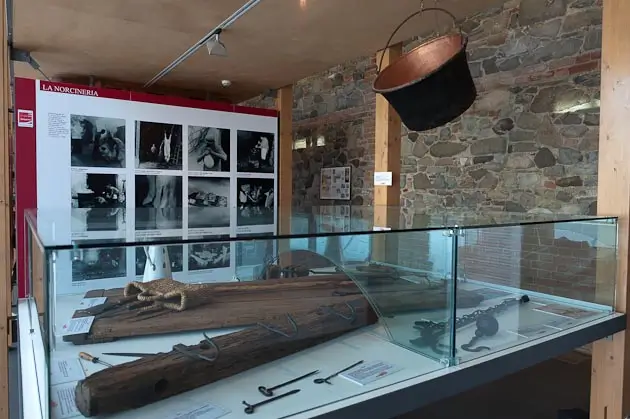
Salami Museum — Felino. The town that gave its name to one of the Parma area’s most refined cured meats. The museum reconstructs the entire local pork-processing tradition, from meat selection to aging.
Parma Ham Museum — Langhirano. In the heart of the production area, where the air descending from the Apennines does what no artificial system can replicate elsewhere. More than any other museum in the network, this one explains the relationship between a food product and its microclimate.
Wine Museum — Sala Baganza. The “Wine Cellar of the Food Museums” occupies the restored cellars of the Rocca Sanvitale, which belonged to the Sanvitale family from the thirteenth century until the Farnese era. It is dedicated to the wines of the Parma area — including Malvasia dei Colli di Parma — and has the advantage of combining a castle and a museum in a single visit.
6. In the Apennines: Porcini Mushrooms and Truffles
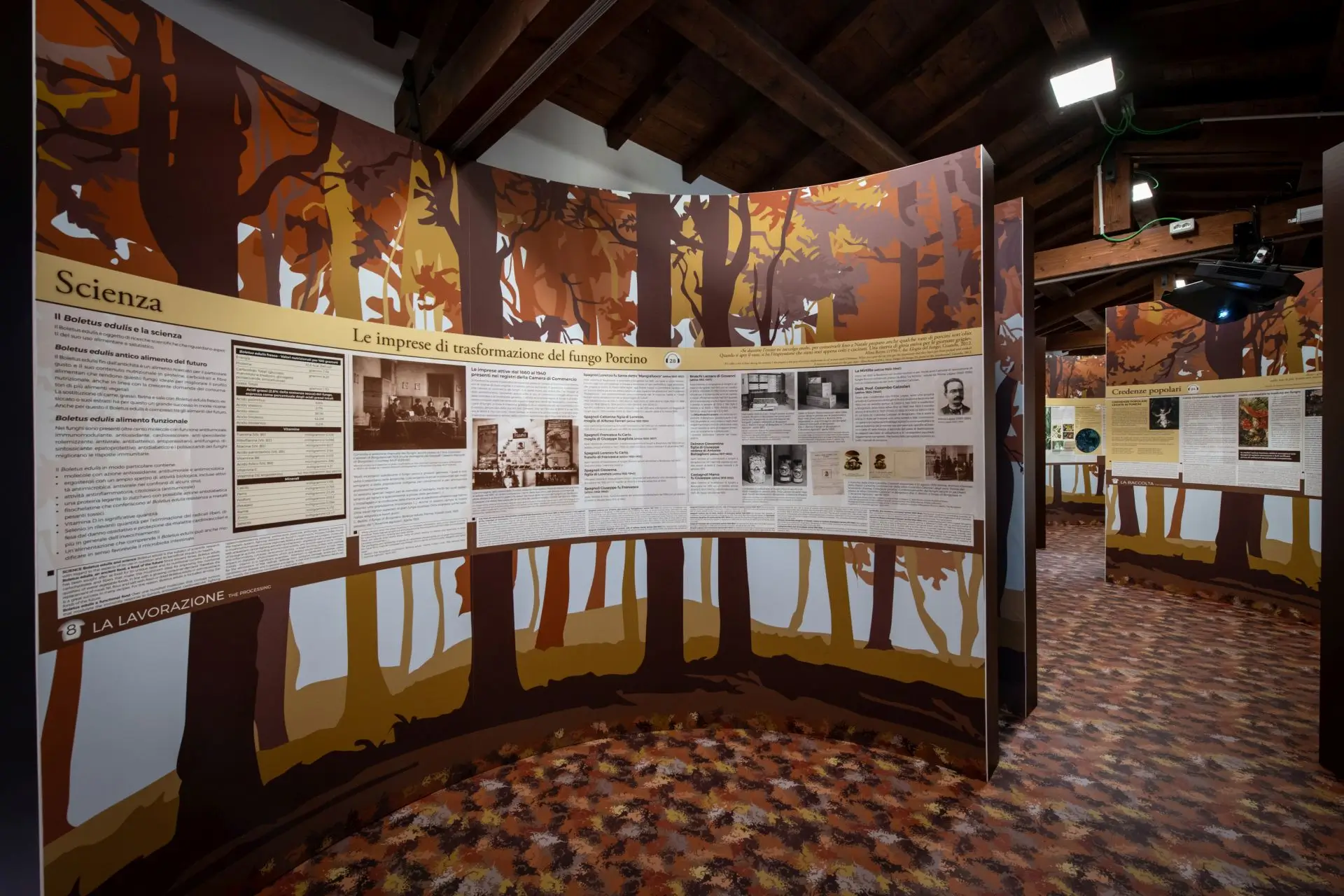
Porcini Mushroom Museum — Borgo Val di Taro and Albareto. Two locations devoted to the signature product of the upper Taro Valley, home to Italy’s only PGI-certified porcini mushroom. The Borgotaro location is at Via Cesare Battisti 86. The Albareto location opens during the Mushroom Fair, between late September and early October.
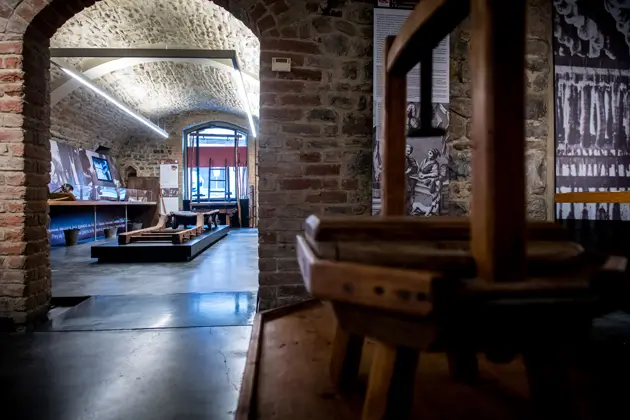
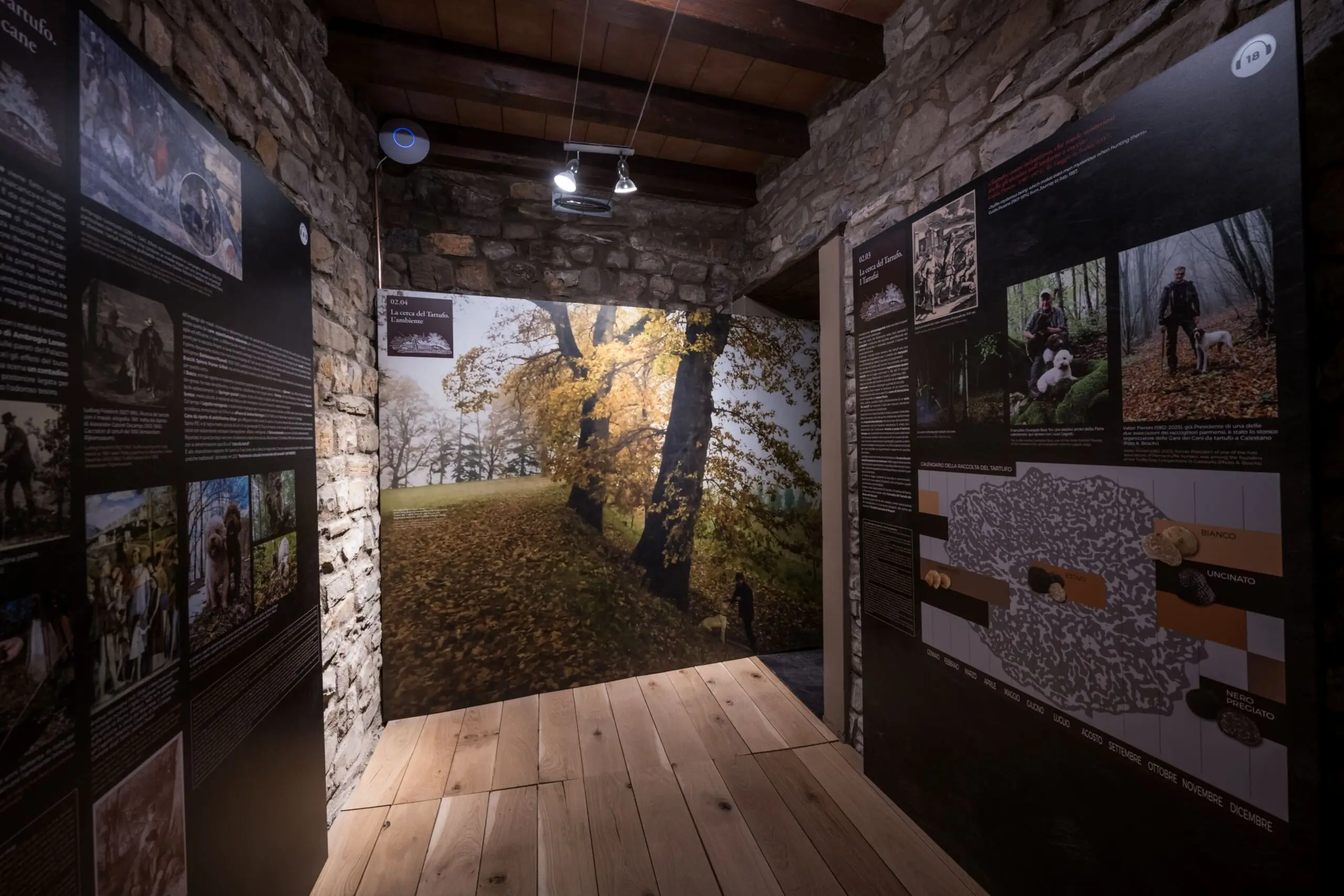
Fragno Truffle Museum — Calestano. The newest addition to the network, and perhaps the one with the most atmospheric setting: the former prison cells of the medieval village, with small underground rooms built in stone. It is dedicated to the Fragno Black Truffle, which grows in the hills of the Val Baganza surrounding the town. Visit on the last Sunday in October and you will also find the annual truffle fair.
7. In the city: the Diffused Museum of Taste
The tenth element of the network has no single location: it is Parma’s historic center itself. The Diffused Museum of Taste connects shops, places and memories across the city that UNESCO recognized as a Creative City of Gastronomy. It is a particularly good option for a rainy day in Parma — not least because the city has plenty of porticoes, allowing you to explore much of the center while staying under cover.
Those who want to remain in the city can combine it with a tour of the wine bars in the historic center: in the Food Valley, the distance from museum to wine glass is shorter than you might expect.
8. Planning your visit: passes, tickets and audio guides
The Museum Card gives discounted admission to all the museums without having to purchase individual tickets, as well as discounts at participating restaurants. It starts to make sense if you plan to visit at least three museums.
The family ticket includes the Museum Quiz, designed to make the experience more engaging for children — something that many specialist museums struggle to achieve.
Audio guides are free: they can be downloaded as MP3 files from each museum’s website and played on your own phone. This is particularly useful because several locations are self-guided and do not always have staff available to explain the exhibits.
How many can you visit in one day? Realistically, three — perhaps four if they are close together. Pasta + Tomato in Collecchio effectively count as a single stop. The two Apennine destinations — Borgotaro and Calestano — are better treated separately: they are farther from the other museums and in different directions.
By bicycle: the network has dedicated cycling routes connecting some of the museums in the hills, and the official website also suggests itineraries for travelers with camper vans. If the weather improves, you can find more ideas in the article on cycling routes through the Food Valley.
“The Food Museums are not simply a fallback for bad weather: they are the instruction manual for understanding the region. Visit them before touring dairies and traditional producers, and you will look at everything that follows differently.”
9. Food Valley Travel experiences
The museums tell the history; visits to working producers show you the present. Combining the two works better than either one alone — and on rainy days it has the practical advantage of taking place almost entirely indoors. Food Valley Travel offers several experiences that pair particularly well with the museum circuit.
→Forks & Fun! – Cook with a Local – an excellent answer to a rainy weekday when the museums are closed: an indoor cooking class with a local cook, from rolling fresh pasta to the finished dish.
→Parmigiano Reggiano Tour – The One and Only – a dairy visit is the natural complement to the Parmigiano Reggiano Museum: first the historic tools, then the people who still use their modern equivalents every day.
→Food Valley Gourmet Tour – The Original (Half Day) – a dairy and Parma Ham producer in half a day, leaving the afternoon free for one or two museum stops. An efficient way to make the most of a Saturday.
→Timeless Parma – Discover the City’s Masterpieces – for visitors staying in the city who want to combine the Diffused Museum of Taste with Parma’s artistic masterpieces, exploring the historic center beneath its porticoes.
The territory, explained
The Province of Parma has done something that few gastronomic regions in the world have done: rather than simply selling its products, it has taken the time to explain them. Nine museums, nine products, nine pieces of agricultural and industrial history that, taken together, tell the story of how this stretch of plains and hills became a global reference point for food culture.
The practical advice remains the same as at the beginning: check opening days before getting in the car, and plan your museum visits for the weekend. If it rains on Saturday, you have just found the perfect day. If it rains on Tuesday, you already know what to do — visit a dairy, a Parma Ham producer, and a kitchen.