At five in the morning, inside a dairy in the province of Parma, a man reaches into the curd and makes a decision. He doesn’t consult a protocol, wait for data, or call a meeting. He assesses the texture with his fingers and decides that the moment has come to break the curd. If he gets the timing wrong by five minutes, the damage is done — and it may not become apparent for another twelve months.
This gesture, repeated every morning for centuries in approximately three hundred dairies, contains more lessons about management than many leadership courses. Not because a cheesemaker is a manager, but because his work brings together five conditions that businesses face every day and often try to work around: non-negotiable time constraints, irreversible decisions, delayed feedback, external standards, and traceable individual accountability.
This is the foundation of an experiential training format that, in recent years, has become one of the most frequently requested experiences in the Food Valley’s corporate travel sector. This article explains why it works — and when it might not be the right approach.
“A cheesemaker doesn’t control a process: he works with it. It’s a skill often missing in organizations that want to control everything.”
1. Five Lessons the Process Demands (Rather Than Suggests)
Time constraints cannot be renegotiated. Parmigiano Reggiano is made using milk from the evening milking and the following morning’s milking. The production window lasts only a few hours and cannot be moved. No meeting can postpone it until tomorrow. In business, this is known as an external constraint, and the difference between a team that accepts it and one that tries to negotiate it is immediately apparent.
Irreversible decisions exist — and must be made by those with the expertise. Breaking the curd with the traditional spino tool is a critical moment: once broken, the curd cannot be put back together. This is not a decision made by committee; it is a decision based on expertise. For groups accustomed to consensus-based decision-making, it may be the most uncomfortable — and most valuable — exercise of the day.
Feedback arrives a year later. The cheese wheel produced this morning will be assessed twelve months from now, when a Consortium expert taps it with a small hammer to evaluate its internal structure. No weekly metrics, no dashboards. It is the exact opposite of the environment in which most teams operate — and that is precisely why the experience leaves a lasting impression.
Standards are external and non-negotiable. The PDO production regulations allow no additives or preservatives: only milk, rennet, and salt. Wheels that fail to meet the required standards during inspection are downgraded, regardless of how much effort went into producing them. It is a powerful lesson in the difference between effort and results.
Every wheel carries its own identity. Serial numbers, dairy identification codes, and complete traceability. There is no anonymous batch in which responsibility can be diluted. For a working team, this is a far more tangible model of accountability than any diagram presented on a slide.
2. Why a Dairy Works Better Than a Classroom
Experiential training has a familiar challenge: the metaphor. Building a raft or walking across hot coals creates adrenaline and memorable stories, but the connection to real work depends on the debriefing — in other words, on an explanation. If that explanation fails to convince, the activity remains little more than a game.
A dairy eliminates this problem for three reasons.
It is a real production environment. There is no simulation. The milk is real, the finished product will enter the market, and its quality will be assessed by an independent body. A team working inside an operational dairy is not pretending — and everyone can feel the difference.
Interdependence is physical. A 38–40 kg wheel of cheese requires approximately 550 litres of milk and a sequence of actions that one person cannot complete alone within the required timeframe. Collaboration is not an abstract value: it is a technical necessity. When someone slows down, the impact is immediately visible.
The outcome is tangible. At the end of the activity, there are cheese wheels that did not exist before. For teams accustomed to working on abstract, digital, or multi-year projects, producing something tangible in half a day can have a surprisingly powerful effect.
“Team-building experiences should be evaluated three months later, not on the day itself. The right question isn’t ‘Did they have fun?’ but ‘Are they still talking about it?'”
3. The Experience That Keeps Giving: The Cheese Wheel Returns
This is where the format becomes particularly interesting. It addresses one of the main weaknesses of traditional team-building activities: their impact tends to fade quickly.
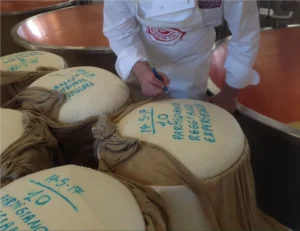
The cheese wheels produced during the activity are signed by the participants and remain at the dairy to mature for at least one year. They then become the property of the team and can be collected on-site or shipped, including internationally.
The practical result is that the experience has a second chapter. Twelve months after the event — when most team-building activities would have been forgotten — a 38 kg cheese wheel arrives at the company’s offices, bearing the participants’ signatures. The team gathers to open it. New colleagues ask about it. Those who took part share their stories.
From a training perspective: it creates a built-in twelve-month reminder, rather than requiring a separate follow-up initiative. For HR professionals who know how difficult it can be to sustain the impact of training beyond the first quarter, this is one of the strongest reasons to consider the format.
From a conceptual perspective: the cheese wheel embodies the lessons of patience and delayed feedback. The concept is not simply explained in a classroom — it arrives by courier a year later.
4. How the Experience Works
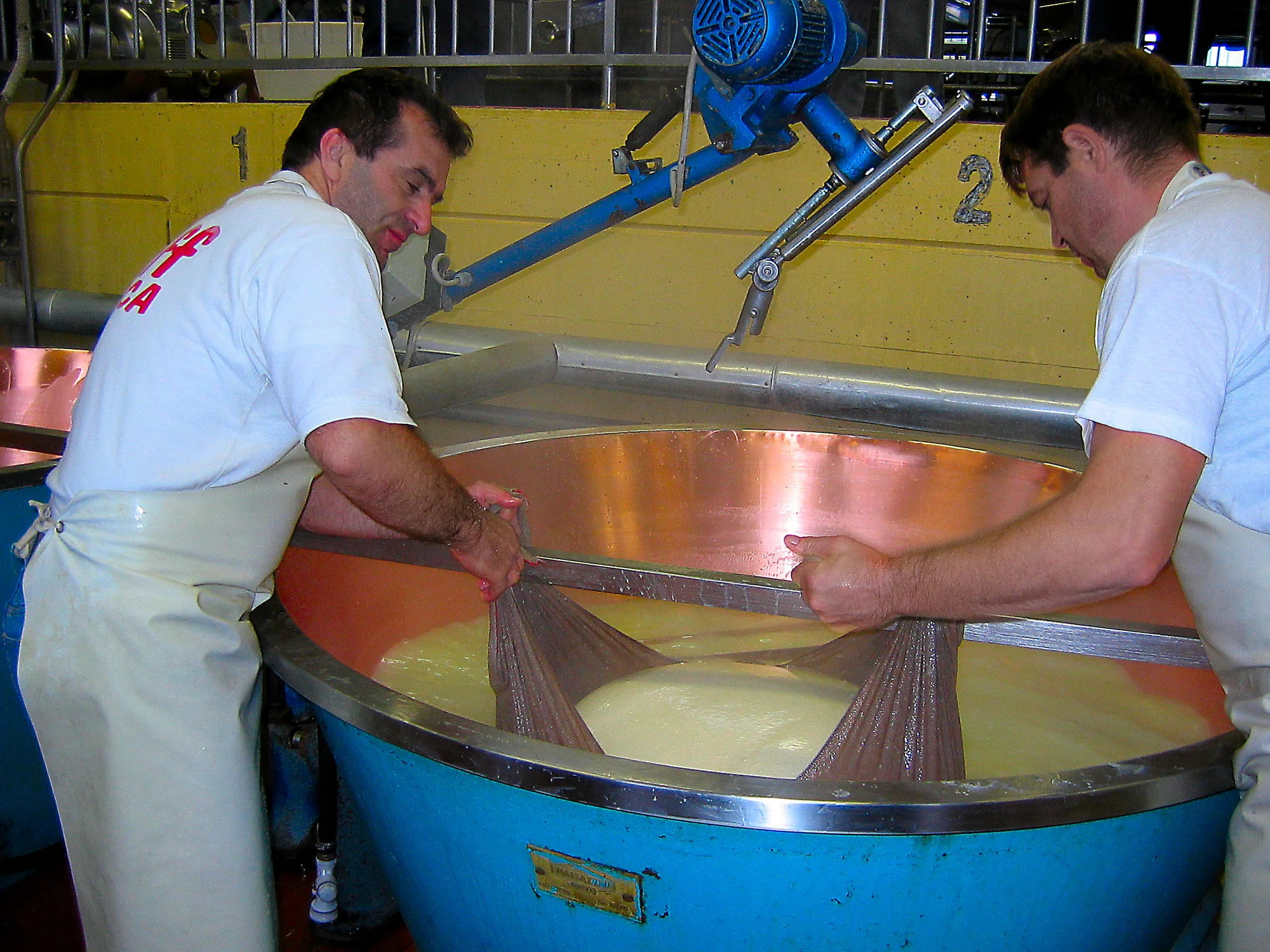
The A Day as a Cheesemaker experience takes place in an operational dairy near Parma. It lasts half a day and is available Monday through Saturday for groups of 2 to 10 participants. The experience follows these stages.
Getting ready. Each participant receives dedicated workwear and appropriately sized footwear. This is not theatrical dressing-up: it is a hygiene requirement inside an active food-production facility. It is also the moment when participants realize that this is not an ordinary guided tour.
Introduction to the dairy. An overview of traditional production methods, timing, and constraints. This is where the difference emerges between those who simply observe a process and those who recognize an opportunity to learn from it.
Working together. From fresh milk to curd, copper vats, and the initial stages of shaping the cheese wheels, participants work alongside experienced cheesemakers. This is the heart of the activity, where coordination becomes something tangible and measurable.
Signing and beginning the aging process. Participants sign the cheese wheels they have helped produce, which are then placed in storage. The twelve-month countdown begins.
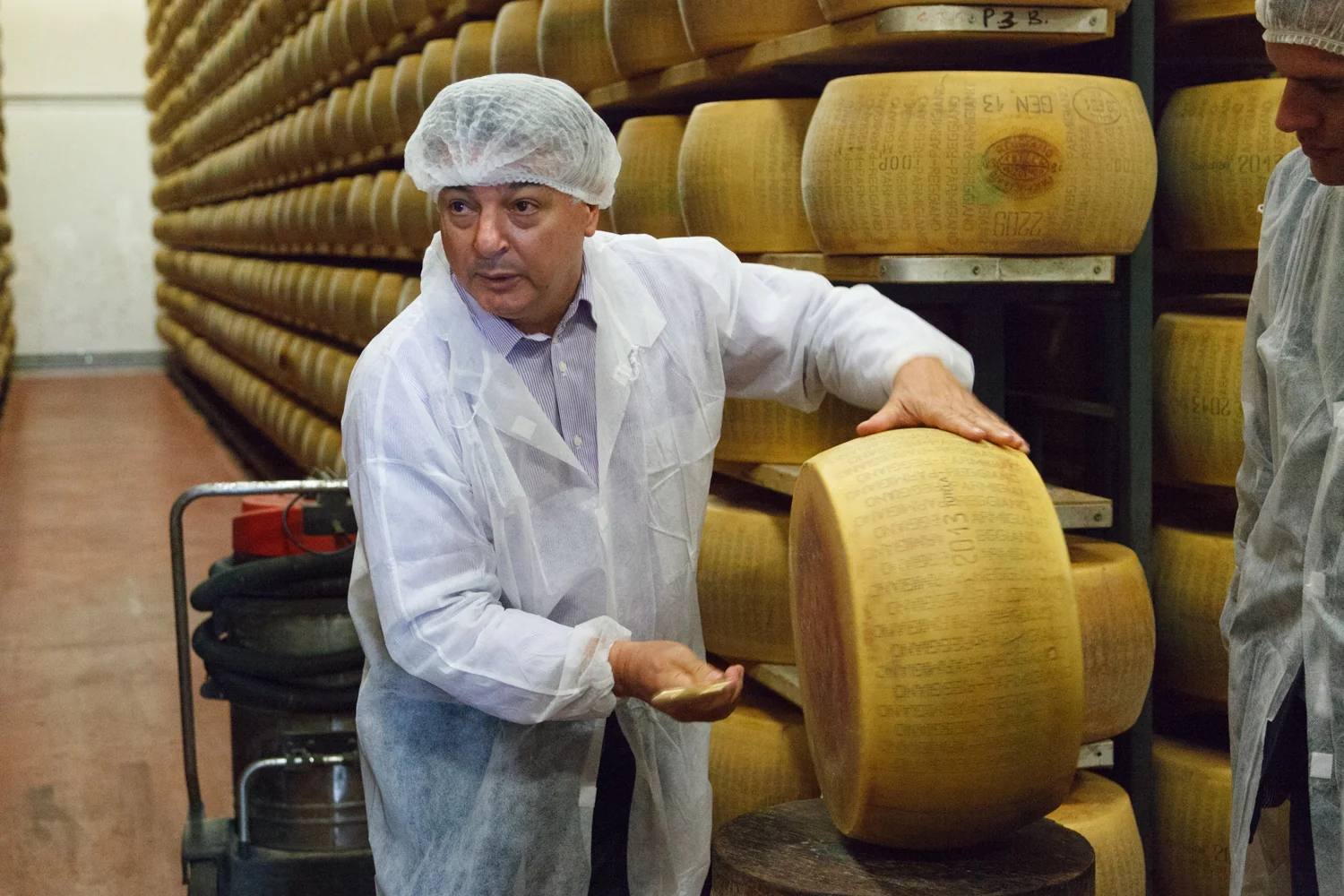
Salting, aging, and the maturation warehouses. An introduction to the subsequent production stages, followed by a visit to the aging warehouses — the magnificent “cathedrals of cheese wheels,” which are worth experiencing for their visual impact alone.
Comparative tasting. Different maturation periods are compared to understand, through taste, the transformation created by time. It is also a convivial moment that brings the experience to a satisfying conclusion.
5. Who Benefits Most — and When It May Not Be Suitable
No team-building format works for everyone. Presenting it as a universal solution is the quickest way to undermine its value.
It works particularly well for: cross-functional teams that need to learn how to depend on one another; groups working toward long-term goals that require patience; management teams exploring the difference between expert-led and consensus-based decisions; newly formed or recently reorganized teams looking for a meaningful shared experience; and programs for clients or business partners, where exclusive access is part of the value. An operational dairy is not somewhere visitors can simply walk into.
It is less suitable for: very large groups — the activity is designed for a maximum of 10 participants, so a company with 80 employees would need a rotation system or a different format; events focused purely on informal socializing, where a lighter activity may be more effective; and situations requiring internal competition, because this is not a contest. Either the cheese wheel turns out successfully, or it doesn’t.
An important logistical consideration: cheesemaking starts at dawn. Activities inside the production areas must follow the timing of the milk, not the company’s event schedule. This needs to be considered when planning the day.
6. Building a Complete Corporate Experience
A half-day at the dairy leaves room for a second activity, and the combination can significantly shape the overall learning experience. Food Valley Travel designs tailor-made corporate programs in Italy’s Food Valley, combining team-building experiences with event and meeting venues, including historic villas, private production facilities, and wineries.
→ Parmigiano Reggiano Team Building – A Day as a Cheesemaker – the experience described in this article: half a day inside an operational dairy, for 2–10 participants, Monday through Saturday. It includes workwear, hands-on cheesemaking alongside experienced professionals, signing the cheese wheels, visiting the maturation warehouses, and a comparative tasting. The wheels mature for at least one year before being delivered or shipped to the team.
→ Team-Building Experiences – our complete collection of corporate experiences, from leadership development to communication and strategic alignment. Ideal for designing multi-day programs rather than a single standalone activity.
→ Murder Mystery Dinner Team Building – one of the most popular evening complements. After a morning dedicated to a rigorous production process, this investigative format develops listening skills, hypothesis testing, and decision-making with incomplete information.
→ E-Bike Team Building – for groups looking to incorporate an outdoor element, an e-bike experience through the Parma hills helps accommodate different fitness levels while encouraging collaboration and shared discovery.
→ Corporate Event Venues – historic villas, wineries, and private executive spaces throughout the Food Valley, with selected venues also available in Tuscany, Lombardy, and Veneto. An ideal starting point for incorporating team building into a convention or corporate off-site.
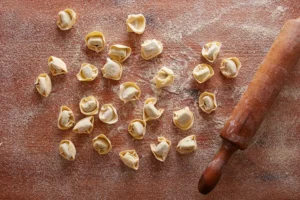
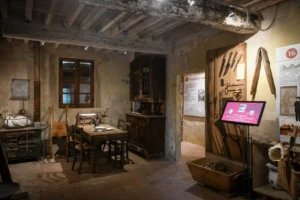
A combination worth considering: pairing the dairy experience with a culinary activity, such as the Pasta Challenge, creates a useful contrast between a process that allows no mistakes and one that rewards adaptability. For companies planning a full week of meetings or events, the Food Museums provide the cultural background that explains the region’s distinctive approach to food production, while castle dinners offer a memorable conclusion to the program.
Patience as a Leadership Skill
The reason a dairy works as a learning environment is not folklore, nor is it simply the cheese itself. Parmigiano Reggiano is one of the few remaining production processes in which technology has not shortened the fundamental timeline. Twelve months meant twelve months in the Middle Ages, and they still mean twelve months today. In a business environment where everything is measured in sprints, spending half a day inside a system that cannot be accelerated is an almost disorienting experience — and experiences that challenge our expectations are often the ones we remember most.
At the end of the day, every participant has signed something they will not be able to evaluate for another year. It is an uncomfortable idea, far more challenging than a conventional trust-building exercise. And that is exactly why bringing a team into a dairy can be so valuable.