

Some castles are visited for their architecture. Others for their views. The castles of the Duchy of Parma and Piacenza are visited for their stories — and the most powerful ones, the stories that stay with you long after the visit, are almost always stories of women.
Women whose love inspired magnificent frescoes. Women promised in marriage and then subjected to cruel trials. Women who threw themselves from towers for love. Within a radius of just a few dozen kilometres, between the hills of Parma and the Piacenza Apennines, the castles of the Duchy preserve a narrative heritage unlike any other in Italy: a blend of history, legend and architecture that transforms every visit into a journey through time.
“The castles of the Duchy of Parma are not museums. They are stages where the fifteenth century has never stopped performing.”
1. Torrechiara: The Castle Built for Love
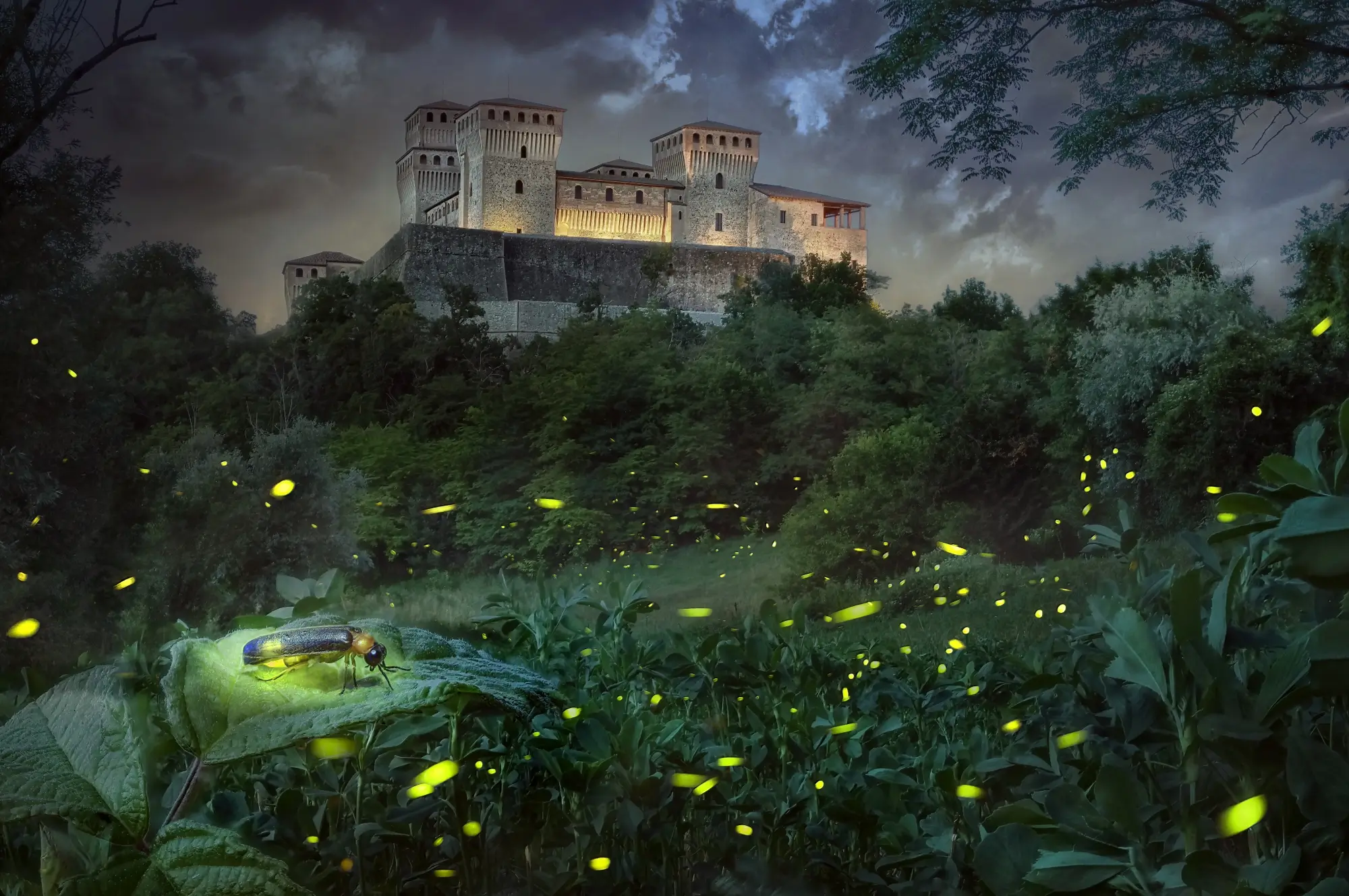
If there is one place in Italy where courtly love has left a tangible mark in stone and frescoes, it is Torrechiara Castle. Perched on the first hills above Langhirano — the same area where Parma Ham is aged — it overlooks the Parma Valley with its four corner towers and three defensive walls.
The story is that of Pier Maria II de’ Rossi, the most powerful lord in the Parma area during the fifteenth century, and Bianca Pellegrini, a Milanese noblewoman from the Visconti court. Pier Maria met her in Milan, fell deeply in love with her and brought her to his lands, despite already being married to Antonia Torelli of Montechiarugolo. For Bianca, he built not one but two castles: Torrechiara, between 1448 and 1460, and Roccabianca, in the Lower Parma countryside.
The Golden Chamber: the heart of Torrechiara is the Golden Chamber, decorated with frescoes by Benedetto Bembo around 1462 and considered one of the finest examples of International Gothic art in Italy. The walls depict Bianca’s journey — shown as a “pilgrim,” a play on her surname, Pellegrini — through all the castles of the Rossi estates, until her reunion with Pier Maria. The mountain castles are painted in the four sections of the vaulted ceiling, while those of the plains and hills appear in the lunettes below. The gold that once covered the terracotta tiles has disappeared, but the name remains.
How the Story Ended: Pier Maria died at Torrechiara in 1482, defeated by his enemies. His embalmed body was placed sitting on a large chair in the Golden Chamber, dressed in golden brocade and displayed to his subjects as a symbol of resistance and inspiration. The fortress fell the following year. Bianca then disappeared from history.
A Cinematic Curiosity: Torrechiara was used as a filming location for the 1985 movie Ladyhawke, starring Michelle Pfeiffer and Rutger Hauer. A cinematic castle in every sense of the word.
2. Bardi: The Ghost of the Lovestruck Knight
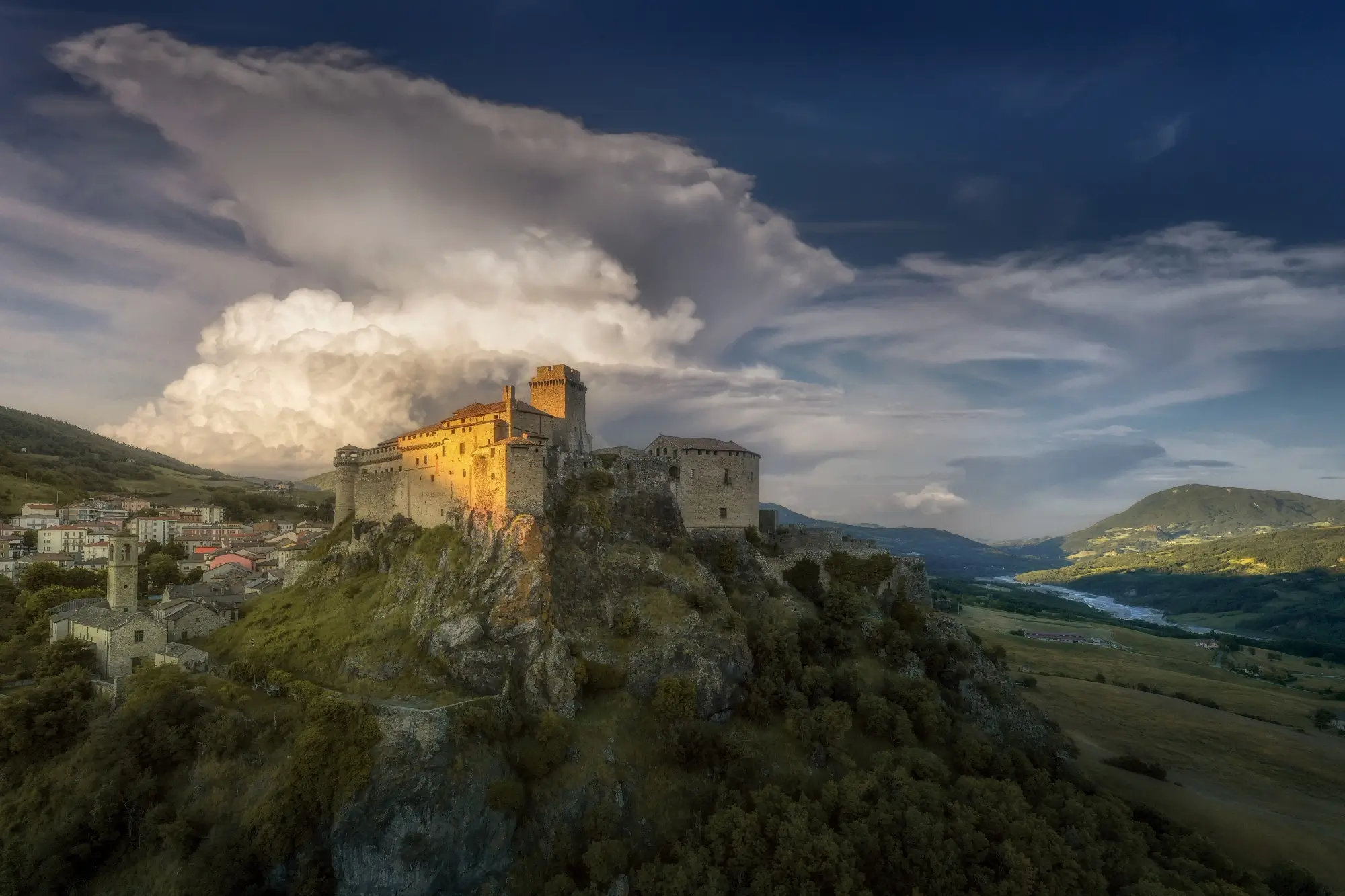
Bardi Fortress, located in the upper Ceno Valley around 60 kilometres from Parma, is one of the finest examples of military architecture in Italy. Yet the reason most visitors make the journey here is not the architecture. It is the ghost.
The legend dates back to the late fifteenth century. Moroello, commander of the troops defending the castle, was in love with Soleste, the sixteen-year-old daughter of the castle’s lord. She had already been promised in marriage to a neighbouring feudal lord for political reasons. The two lovers met in secret, protected by her nurse, until Moroello left on a military expedition.
Every day, Soleste climbed to the top of the keep and scanned the horizon. One day, she saw horsemen approaching under the enemy’s banners. Believing Moroello had been killed in battle, she threw herself from the tower. But the riders were his own men. Moroello had returned victorious and had made them wear the enemy’s insignia as trophies of conquest. When he found Soleste’s body, he took his own life.
According to tradition, Moroello’s ghost has wandered through the rooms of the fortress ever since, accompanied by melancholy music. In 1995, Bardi Castle attracted the attention of paranormal researchers when a group of parapsychologists from Bologna used thermal cameras to record a figure resembling a fifteenth-century knight in armour. Whether real or the result of suggestion, the fascination of Bardi is undeniable.
“At Torrechiara, love is painted on the walls. At Bardi, it still wanders through the corridors. Two different ways of never dying.”
3. Roccabianca: Boccaccio’s Griselda and Bianca’s Secret Retreat
Roccabianca Castle, in the Lower Parma countryside, is Torrechiara’s “younger sibling”. Built by the same Pier Maria Rossi in the mid-fifteenth century as a residence for Bianca Pellegrini, it is smaller in scale but equally captivating.
Its most famous room is the Hall of Griselda, decorated with a cycle of 24 scenes inspired by the final tale of Boccaccio’s Decameron. It tells the story of a young peasant woman who marries the Marquis of Saluzzo and is then subjected to a series of psychologically cruel trials: the removal of her children, a false repudiation and the requirement to prepare her husband’s wedding to another woman, all designed to test her loyalty. The original frescoes were removed in 1897 and are now held at the Sforza Castle in Milan. The room currently displays faithful reproductions created by the painter Gabriele Calzetti from Fidenza between 1997 and 1999.
Why Griselda? The choice was no coincidence. While building a castle for his lover Bianca, Pier Maria commissioned frescoes telling a story of absolute female loyalty — a subtle message that may have been a warning, a dedication or perhaps both. Interpretations have overlapped for centuries.
An Unexpected Detail: Culatello and other cured meats are still aged today in the cellars beneath Roccabianca’s keep. The castle stands along the Culatello Route, and visitors can taste one of Emilia’s most prestigious cured meats in the very area where it originated.
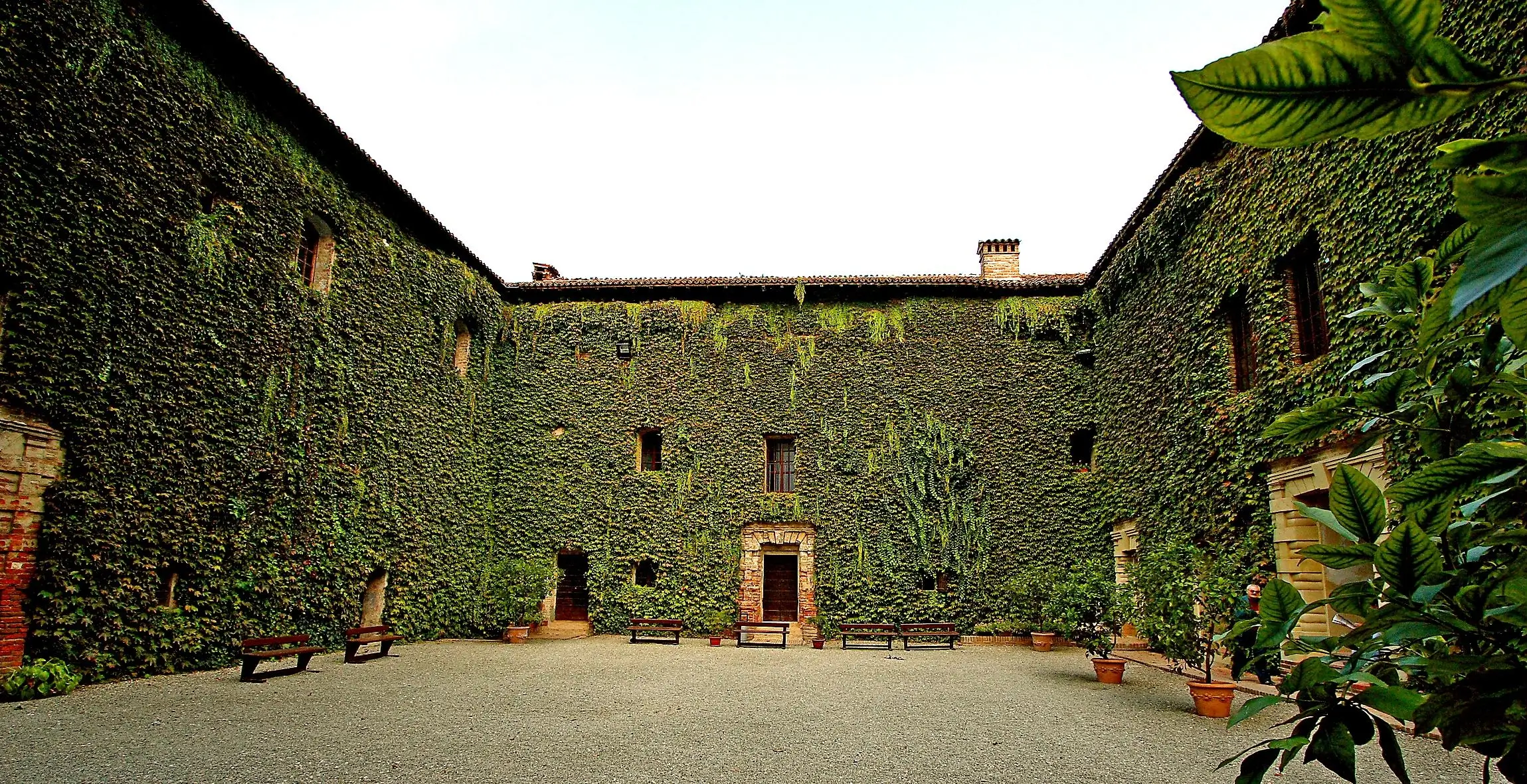
4. Other Castles Not to Be Missed
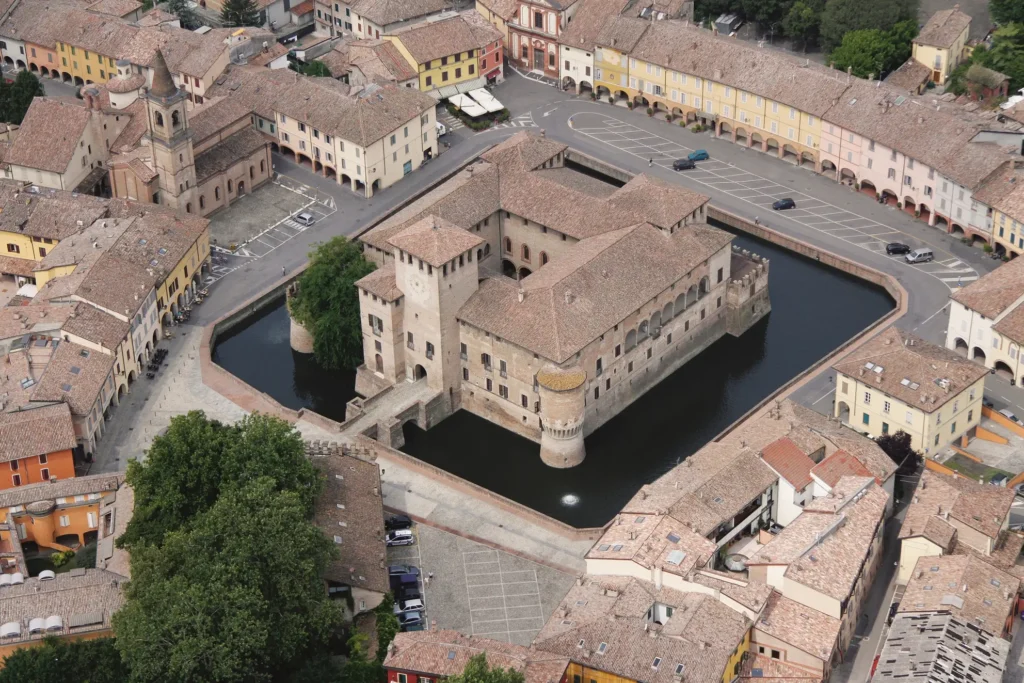
Fontanellato Castle: home to the Sanvitale family for four centuries, Fontanellato Castle is surrounded by a moat that is still filled with water. Inside, the small Room of Diana and Actaeon contains a cycle of frescoes painted by Parmigianino in 1524 — one of the hidden masterpieces of the Italian Renaissance.
Rocca Sanvitale in Sala Baganza: set among the hills where Malvasia dei Colli di Parma wine is produced, Rocca Sanvitale features Mannerist frescoes and houses the Wine Museum in its basement.
Rivalta Castle: located in the province of Piacenza and overlooking the Trebbia River, Rivalta is surrounded by a perfectly preserved medieval village. Its cylindrical tower dominates the valley, making it one of the most photogenic castles in the Duchy.
Compiano Castle: located in the Taro Valley, this small and beautifully preserved castle houses the Gambarotta Museum, with a collection of Asian art. It is also said to be haunted by the ghost of a Marchioness who walks along the battlements on nights of the full moon.
The Royal Palace of Colorno: known as the “Little Versailles”, the Royal Palace of Colorno is the only true royal residence in the area. It is also home to ALMA, the International School of Italian Cuisine founded by Gualtiero Marchesi.
All these castles belong to the Castles of the Duchy of Parma, Piacenza and Pontremoli network, which includes more than 30 castles, fortresses and historic residences open to visitors. Many of them also host evening events, medieval dinners and themed tours.
5. Castles and Cuisine: Food Valley Travel Experiences
The castles of the Duchy are easy to visit independently, but they are better understood with a guide who knows their stories — and they are even more enjoyable when the visit is combined with local food. This is no coincidence: castles, dairies and wineries share the same hills and the same history. Food Valley Travel has created a dedicated collection of experiences combining historic fortresses with outstanding local cuisine.
→ Fine Food & Stunning Castle – Parma Hills – an itinerary featuring Torrechiara Castle, its Golden Chamber and sweeping views across the Parma Valley, combined with the gastronomic excellence of the surrounding hills. This is the most popular option for travellers who have only one day available.
→ Fine Food & Stunning Castle – Lower Parma Countryside – the lowland side of the Duchy, combining the romantic castles of the plains with the cured meats still aged in their cellars, especially Culatello. It reveals a less touristy and more authentic side of the region.
→ Fine Food & Stunning Castle – Between Milan and Parma – a route through the Piacenza area, featuring medieval villages and fortresses along the corridor between Milan and Parma. It is ideal for travellers arriving from Lombardy who wish to enter the Food Valley through its most scenic gateway.
Practical advice: the best time to visit the castles is between April and October, when many fortresses organise evening tours, historical re-enactments and themed dinners. Always check opening times before setting out, as several castles in the network operate seasonally or are open only at weekends.
Stones That Tell Stories
The castles of the Duchy of Parma and Piacenza are not relics of the past: they are active storytellers, places where history continues to speak through frescoes, legends and walls that have witnessed centuries of passion, betrayal and impossible love. The women who inhabited them — Bianca Pellegrini, Soleste and Griselda — are not supporting characters. They are the protagonists.
The next time you plan a journey through the Food Valley, do not stop at the food. Climb into the hills, walk through a medieval gateway and allow yourself to be told a story. Some of these stories, they say, are not over yet.