

There’s a question in Emilia that can spark a debate more heated than any football derby: “How do you make anolini?” Ask it in Parma and you’ll get one answer. Ask it in Piacenza and you’ll get another—delivered with exactly the same absolute certainty. And don’t even try to say they’re the same thing, because they’ll look at you as if you’d sworn inside a cathedral.
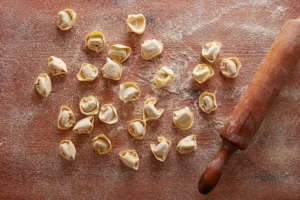
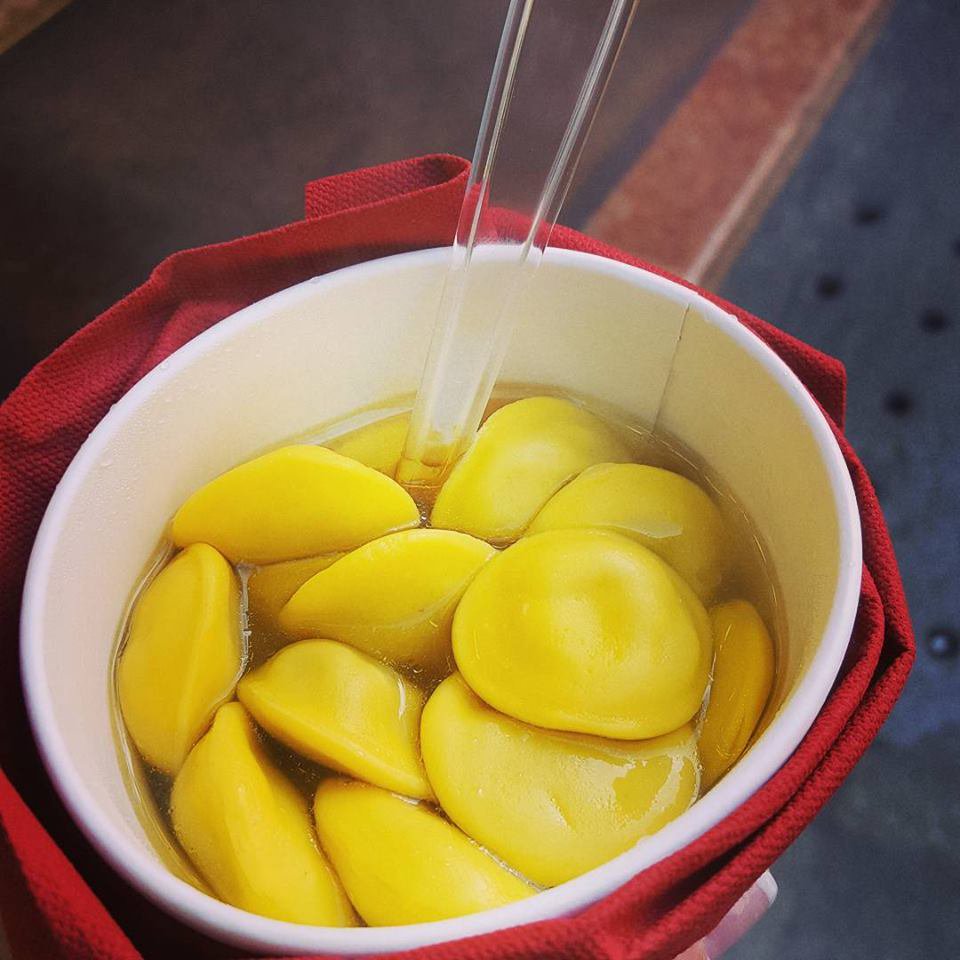
Anolini are small stuffed pasta discs—no more than 2–3 centimeters in diameter—served strictly in meat broth. They are the ultimate festive dish of the Food Valley, the star of Christmas lunch and any celebration that matters. But behind this apparent simplicity lies one of the region’s most heartfelt culinary disputes: the one between the Parmesan and Piacentine versions.
“Anolini are not just a dish. They are an identity. And in Emilia, identity is defended at the table with the same passion that elsewhere is reserved for the courtroom.”
Origins: from Bartolomeo Scappi to Christmas tables
The history of anolini is long and noble. The earliest traces date back to the 13th century, when the chronicler Salimbene de Adam mentioned them in his Chronica in 1284. But it was in the 16th century that anolini entered the great tradition of Italian cuisine, thanks to Bartolomeo Scappi—the most famous Renaissance chef, who served cardinals and popes—who documented them in his Opera in 1570.
From a dish of ducal courts, anolini later became part of popular cuisine. Pellegrino Artusi included them in his Science in the Kitchen at the end of the 19th century, establishing them as a classic of Emilian tradition. Today they are recognized as a Traditional Agri-food Product (PAT) in both Emilia-Romagna and Lombardy, and their preparation is a ritual passed down from generation to generation.
Etymological curiosity: the origin of the name is debated. The most widely accepted theory traces it back to the Latin anulus (ring), referring to the shape of the cutter. Others suggest agnulus (little lamb), since in Roman times a similar pasta was filled with lamb.
The great dispute: Parmesan vs Piacentine filling
Here’s the point that divides families, provinces, and generations. Parmesan and Piacentine anolini share egg pasta and cooking in broth, but the filling is fundamentally different. And for those who grew up with one version, the other is simply “wrong.”
The classic Parmesan anolini: the traditional Parma recipe uses beef stracotto as the base of the filling. The meat is braised for hours with soffritto, red wine, and a spoonful of tomato sauce until it breaks down into a rich, fragrant sauce. In the most orthodox version—Artusi’s—the meat is squeezed and discarded, using only the sauce; in many families, however, finely minced meat is included along with breadcrumbs, aged Parmigiano Reggiano, eggs, and nutmeg. The recipe is so iconic that it was officially notarized in Parma in 2000.
The “lean” anolino of the Lower Parma area: in areas like Fidenza, Salsomaggiore, and Busseto, there’s a meat-free version with a filling made of aged Parmigiano Reggiano, breadcrumbs softened in broth, eggs, and nutmeg. This is the version that obtained the De.Co. (municipal designation) in Fidenza and originally comes from religious fasting days. The result is a delicate, velvety filling where cheese is the star—but note: it’s not Parma’s standard version, but a specific local tradition.
The Piacentine anolino: here too stracotto is central, but the wine traditionally used is Gutturnio (local DOC red), and the cheese is Grana Padano. The cooked meat is finely minced with the cooking vegetables and mixed with breadcrumbs and nutmeg. The difference from Parma lies in the details—the wine, the cheese, the texture—but for locals, those details are everything.
Interestingly, the same “lean” version found in the Lower Parma area also exists in Val d’Arda (eastern Piacenza province): cheese, breadcrumbs, no meat. Two distant areas linked by the same liturgical tradition that shaped family recipes.
“In Parma, the filling is made with stracotto and Parmigiano Reggiano. In Piacenza, with stracotto and Grana Padano. In the lowlands, it’s just cheese. Three versions, three absolute certainties, and not a single family willing to give an inch.”
3. Dough and shape: the details that matter
The differences don’t stop at the filling. Shape and size also vary.
Parmesan shape: round disc, slightly larger (about 3 cm), with a smooth or lightly serrated edge. The pasta sheet is extremely thin—you should almost see the filling through it.
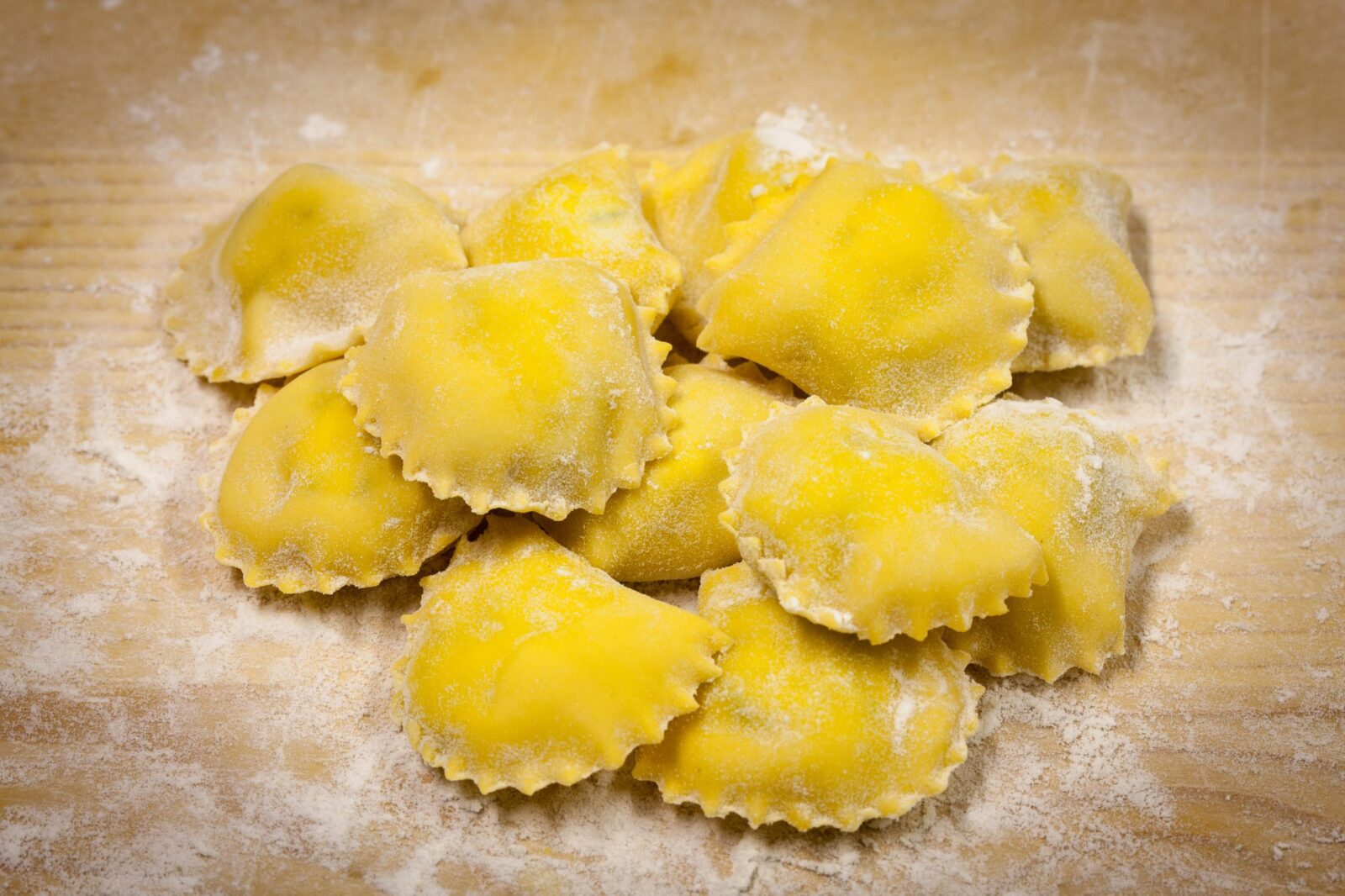
Piacentine shape: slightly smaller, often a scalloped half-moon. Serrated edges are more common. The pasta is thin here too, but the smaller size requires precise sealing.
In both cases, the dough is made with flour and eggs and rolled by hand with a rolling pin—or at least it should be. Sealing is the most delicate step: if the anolino isn’t perfectly closed, it opens during cooking and the filling disperses into the broth—a culinary disaster every Emilian grandmother has learned to avoid.
Key detail: anolini are cooked in broth but served in a different, clearer broth. The cooking broth, inevitably cloudy, is discarded. This double step is one of the secrets to perfect presentation.
4. Anolini vs cappelletti vs tortellini: the map of Emilian stuffed pasta
For outsiders, navigating Emilian stuffed pasta can be confusing. Anolini, cappelletti, and tortellini are often mixed up—but the differences are significant.
- Anolini: round discs or half-moons, small (2–3 cm), filled with cheese or braised meat, served exclusively in broth. Area: Parma, Piacenza, Cremona.
- Cappelletti: hat-shaped, often filled with ricotta or mixed cheeses. Typical of Romagna. Larger than anolini, served in broth or dry.
- Tortellini: iconic ring shape, filled with pork, prosciutto, mortadella, Parmigiano, and nutmeg. Area: Bologna and Modena. Served in broth (never with cream, please).
The unwritten rule is simple: every city has its own stuffed pasta, and in that city, theirs is always the best. Don’t argue—enjoy the variety.
5. The preparation ritual: when cooking becomes ceremony
Making anolini is not a quick task. It’s a ritual that takes entire days—often December 23rd or 24th—and involves the whole family. The stracotto (for the Piacentine version) is cooked the day before. The dough is prepared in the morning. Then everyone gathers around the table with wooden or metal cutters to shape hundreds—sometimes thousands—of anolini, one by one.
It’s both hypnotic and social: hands work, mouths chat, children learn. Grandmothers supervise, correct, and tell stories. And every family guards its recipe like a state secret, with small variations that “make all the difference.”
“Closing anolini at Christmas is like decorating the tree: you don’t do it out of obligation—you do it because without that moment, the celebration hasn’t truly begun.”
6. Experience the tradition with Food Valley Travel
Reading about anolini is one thing. Sitting at a table in the Food Valley and having them served in a clear, golden, steaming broth—aroma enveloping you before the first spoonful—is something else entirely.
Food Valley Travel organizes experiences that allow travelers to live the tradition of Emilian stuffed pasta firsthand: from hand-rolled pasta to guided tastings, combined with other gastronomic highlights of the region.
→ Almost Local Parma Downtown Foodie Tour – a walking tour through Parma’s historic shops and restaurants, where anolini in broth are often the opening course of an unforgettable food journey.
→ Almost Local Piacenza Downtown Foodie Tour – discover the Piacentine version, with stracotto and Gutturnio. The rivalry makes sense once you taste both.
→ Forks & Fun! – Cook With a Local! – learn how to roll pasta, shape anolini with your own hands, and take home a skill worth more than any souvenir.
→ Food Valley Gourmet Tour – The Original (Half Day) –a half-day tour through a dairy, a ham producer, and a lunch with local products: the perfect context to understand why Parmesan anolini use that specific Parmigiano Reggiano—and no other.
Practical tip: if you visit the Food Valley between November and February, anolini in broth are everywhere. But for the authentic experience, ask your Food Valley Travel guide to take you to a trattoria where they are still handmade with a wooden cutter. The difference is tangible—in flavor and in the story behind every single piece.
Two fillings, one tradition
The dispute between Parmesan and Piacentine anolini has no winner—and it shouldn’t. They are two expressions of the same tradition, two dialects of the same gastronomic language, born from the same land and the same culture of patience and care. Whether the filling is Parmigiano Reggiano or stracotto, whether the shape is round or half-moon, one thing is certain: a bowl of properly made anolini in broth is one of the purest and most moving gastronomic experiences Italy can offer.
Next time you’re in the Food Valley in December, don’t just book a hotel. Book a seat at the table. And order anolini.