

You’ve just arrived in Emilia, you’re sitting in a trattoria with checkered tablecloths, and the waiter asks: “Tigelle or gnocco fritto?” You smile, nod, and inside you think: “Aren’t they the same thing?”
No. They’re not. And the difference isn’t just a detail for purists—it’s the first chapter of a gastronomic education that, once started, you won’t want to stop. Tigelle and gnocco fritto are the two pillars of Emilian street food, the perfect companions to any aperitivo, and the undisputed stars of evenings with friends in the Food Valley. Confusing them is a bit like confusing Modena with Parma: nearby cities, different souls.
“In Emilia, you don’t eat because you’re hungry. You eat to be together. And tigelle and gnocco fritto are the perfect excuse to do it.”
1.Tigella: the mountain bread that conquered the plains
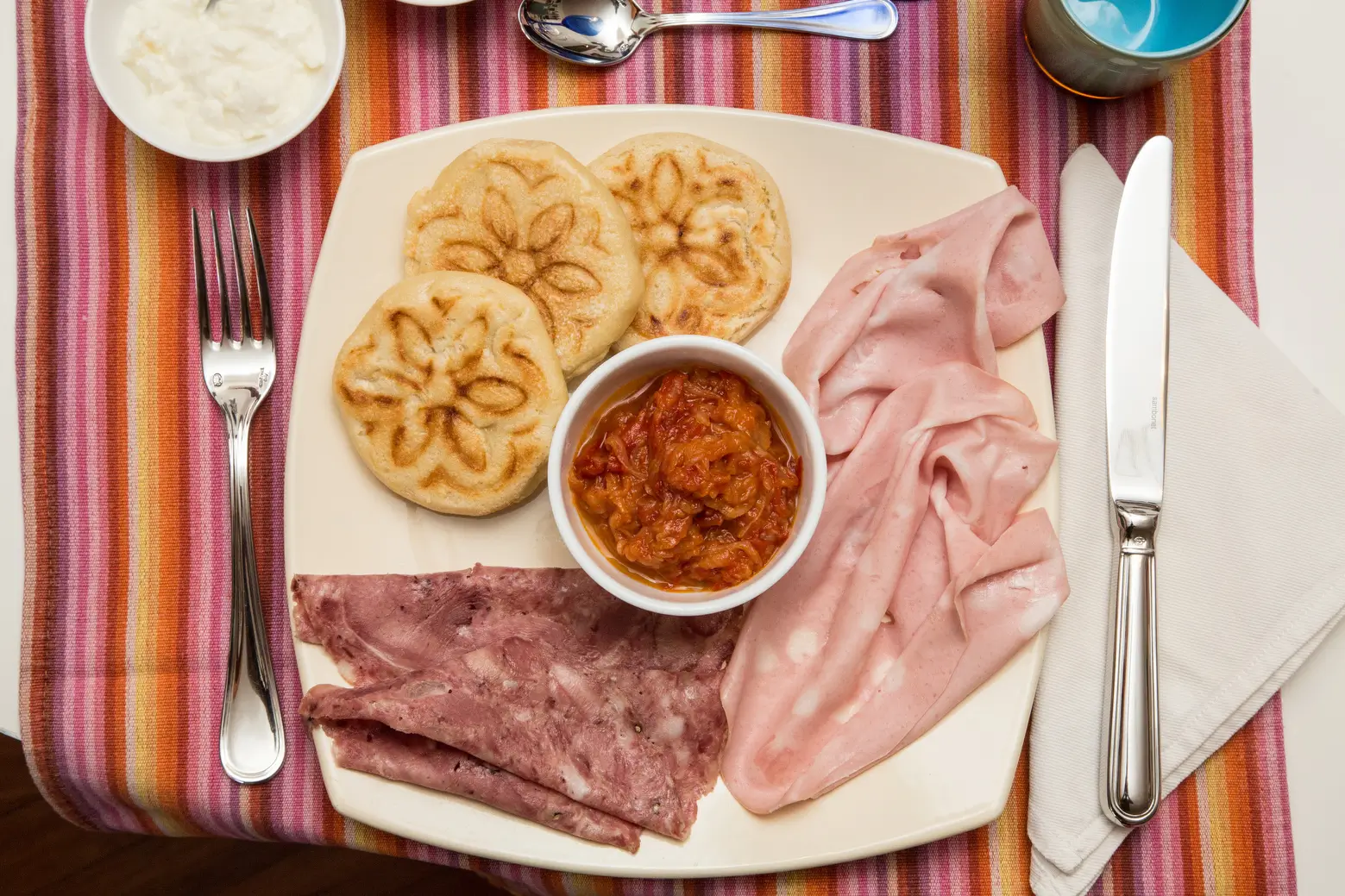
Let’s start with tigella—or, to be philologically correct, crescentina. Because “tigella” originally wasn’t the bread: it was the mold. Terracotta discs engraved with the “flower of life” (an ancient six-petaled symbol), preheated over embers and stacked with balls of dough in between. The food stole the name from its container, and now there’s no going back.
Tigelle were born in the Modena and Bologna Apennines as the humble bread of mountain people: flour, water, salt, and a pinch of yeast. Nothing more. They’re cooked on hot plates (now electric, once stone) and served warm, cut open and ready to be filled.
The classic filling? Pesto modenese—a mixture of lard, garlic, and rosemary that melts into the warm bread, creating something irresistible. But the range of fillings is vast: Parma prosciutto, coppa, salami, stracchino, squacquerone, Colonnata lard, marinated vegetables, arugula pesto.
Traveler’s tip: In Modena, if you order a “crescentina,” you’ll get a tigella. In Bologna, if you order a “crescentina,” you’ll get gnocco fritto. Linguistic chaos is part of the charm—and guarantees lively conversations at the table.
2.Gnocco fritto: the art of frying in the lowlands
If tigella is a child of the mountains, gnocco fritto belongs to the plains—the Po Valley, with its fog and freshly rendered pork fat. It was born as a practical way to reuse leftover flour and animal fat and became one of Italy’s most beloved foods.
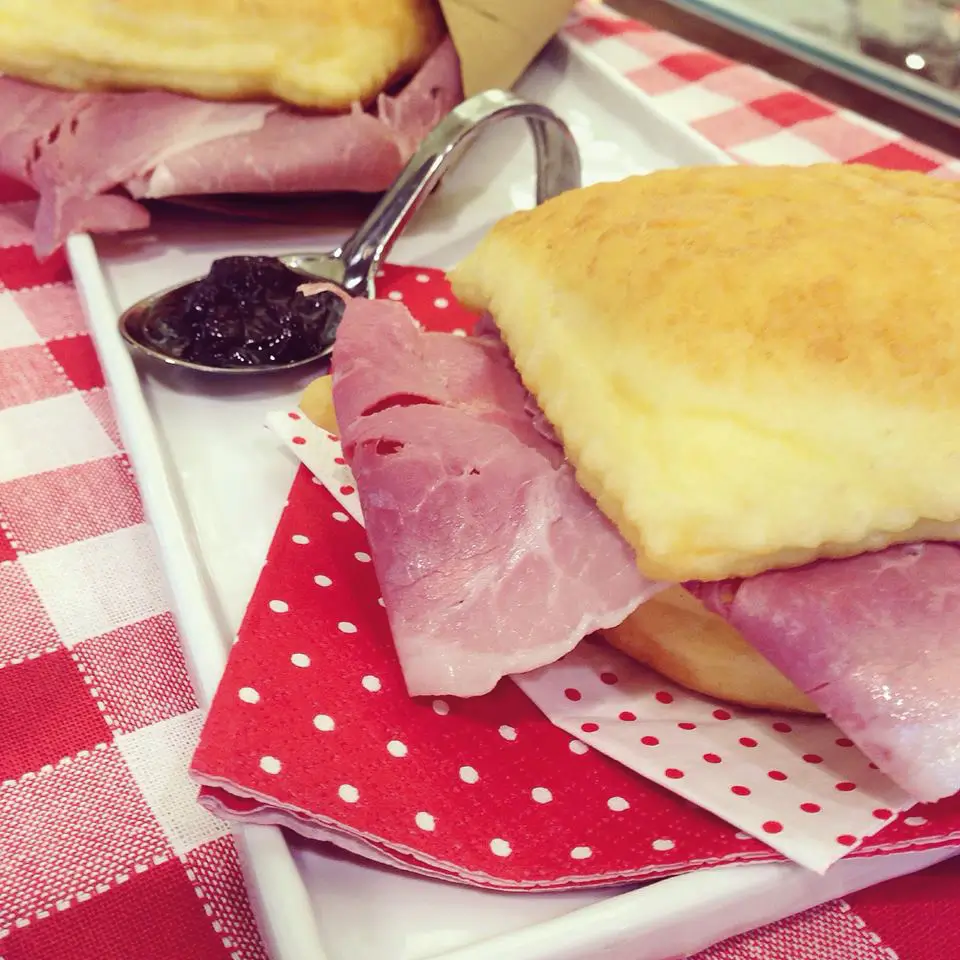
The dough is simple: flour, water (or milk), a bit of lard, and yeast. It’s rolled thin, cut into rectangles or diamonds, and fried. In oil, if you want to be modern. In lard, if you want to be serious. What happens in the pan is a small miracle: the dough puffs up into a golden balloon, crispy outside and hollow inside, ready to hold cured meats and soft cheeses.
Watch the names: In Parma it’s called torta fritta. In Reggio Emilia it’s gnocco fritto (and don’t call it anything else). In Piacenza it becomes chisolino. In Ferrara, pinzino. Same concept, five names in five provinces. Welcome to Emilia.
“The perfect gnocco fritto puffs up like a golden pillow, crunches at the first bite, and disappears in three seconds. If it lasts longer, it wasn’t good enough.”
3.The real differences: cooking, texture, and spirit
Now that we know them individually, let’s put them side by side. Because while they share the same mission—being the perfect vehicle for cured meats and cheeses—they are deeply different.
- Cooking method: tigelle are cooked on a hot plate, without added fat. Gnocco fritto is deep-fried in lard or oil. Two opposite philosophies.
- Texture: tigelle are soft inside and slightly crisp outside, compact. Gnocco fritto is an airy, crispy bubble—light despite being fried.
- Shape: tigelle are round, flat discs about 10 cm wide, split like a sandwich. Gnocco fritto is an irregular rectangle or diamond, puffed and golden.
- Geography: tigelle come from the Modena-Bologna Apennines; gnocco fritto from the Po Valley between Modena, Reggio, Parma, and Bologna.
- Spirit: tigelle mean mountains, rusticity, slowness. Gnocco fritto means plains, conviviality, abundance. Both are perfect for an Emilian aperitivo—but they tell different stories.
4.How to pair them (without embarrassing yourself)
In Emilia, pairing bread and fillings is serious business. Here are the unwritten rules every traveler should know.
With tigelle: Parma prosciutto (sweet, not overly aged), coppa, salame di Felino, fresh stracchino, pesto modenese, lard. The warm tigella slightly melts the fat of the cured meats, creating a unique harmony.
With gnocco fritto: similar cured meats, but also squacquerone, crescenza, sweet gorgonzola. The crispiness calls for something soft and creamy in contrast. A classic: hot gnocco fritto + squacquerone + prosciutto.
To drink: Lambrusco. Always Lambrusco. Dry, sparkling, fresh. Its light tannins and bubbles cleanse the palate between bites. If you order a beer with tigelle, no one will judge you—but you’ll miss half the experience.
“A platter of cured meats, a plate of steaming gnocco fritto, a glass of cold Lambrusco, and a table of friends: this is the Emilian formula for happiness—and it allows no variations.”
5.Where to eat them: the conscious traveler’s map
If you’re planning a trip to the Food Valley and want to experience a true Emilian aperitivo, you have several options. Traditional osterias in Parma, Modena, and Reggio Emilia serve tigelle and gnocco fritto as appetizers or main dishes, often accompanied by a platter of local PDO cured meats.
But to truly understand Emilian street food, sitting at a table isn’t enough—you need to see how it’s made, how it’s cooked, how it’s paired. Food Valley Travel’s guided experiences take you into the heart of local gastronomic tradition, with guides who know every alley, shop, and story behind the counter.
→ Almost Local Parma Downtown Foodie Tour –a walking tour through Parma’s historic food shops, with tastings of cured meats, cheeses, and of course Parmigian torta fritta.
→ Almost Local Modena Downtown Foodie Tour – the modena version, with tigelle, gnocco fritto, Lambrusco, and a guide explaining the local naming quirks.
→ Almost Local Bologna Downtown Foodie Tour – to discover Bologna’s crescentina (which is actually gnocco fritto, remember?) and more.
→ Forks & Fun! – Cook With a Local! – for those who want to move from eating to doing: a cooking class with a local chef.
“The fastest way to understand Emilia isn’t to read a book: it’s to watch someone who’s been doing it for thirty years cut a tigella in half, fill it with prosciutto, and say, ‘Now you get it.’”
The right answer? Both, please
Tigelle and gnocco fritto aren’t rivals—they’re complementary. Two sides of the same Emilian coin: mountains and plains, griddle and frying, compactness and lightness. Confusing them is easy; distinguishing them after tasting both is impossible.
Next time you sit in an Emilian trattoria and they ask, “Tigelle or gnocco fritto?”, there’s only one correct answer: “Both, please.” And a glass of Lambrusco, of course.