

Have you ever found yourself standing in front of a cheese counter with that slightly awkward feeling of not really knowing what you’re buying? Parmigiano Reggiano or Grana Padano: two names, two similar shapes, often different prices—and a confusion that, let’s admit it, affects millions of people around the world.
Yet these are two deeply different cheeses: in terms of territory, production rules, methods, and of course, flavor. Discovering this difference isn’t just a snobbish gourmet exercise—it’s the first step toward eating (and traveling through the Food Valley) with awareness.
“Understanding the difference between Parmigiano Reggiano and Grana Padano means grasping one of Italy’s greatest gastronomic debates—and choosing the right cheese at the right time.”
1.Geography: Where the Two Kings of Cheese Are Born
The difference begins long before the rind. Parmigiano Reggiano is a Protected Designation of Origin (PDO) product that can only be produced in the provinces of Parma, Reggio Emilia, Modena, Bologna (west of the Reno River), and Mantua (east of the Po River). A precise, almost sacred area in the heart of the Food Valley.
Grana Padano PDO, on the other hand, has a much larger production area: it includes most of Northern Italy, from Lombardy to Veneto, from Piedmont to Trentino. More territory, more production, and generally more accessible prices. This is not a judgment of quality—it’s simply geography.
Traveler’s tip: joining a guided tour at a dairy in the Parma area means witnessing something that cannot be replicated outside that specific strip of land. And that matters a lot.
2.Production Rules: The Regulations That Make the Difference
Both cheeses follow very strict production regulations—but they are not the same. Here are the key differences every enthusiast should know.
Cattle feeding
For Parmigiano Reggiano, cows must be fed exclusively with forage produced within the area of origin. No fish meal, no silage—only grass, hay, and local cereals. For Grana Padano, the regulations allow the use of corn silage, which lowers costs and increases production.
Additives and lysozyme
Parmigiano Reggiano does not allow the addition of any additives or preservatives. Grana Padano, however, permits the use of lysozyme (an enzyme extracted from egg white) to control bacterial fermentation. For those with egg allergies, this is far from a trivial detail.
3.Aging: Patience as the Secret Ingredient
Here the differences become even more tangible—and more delicious.
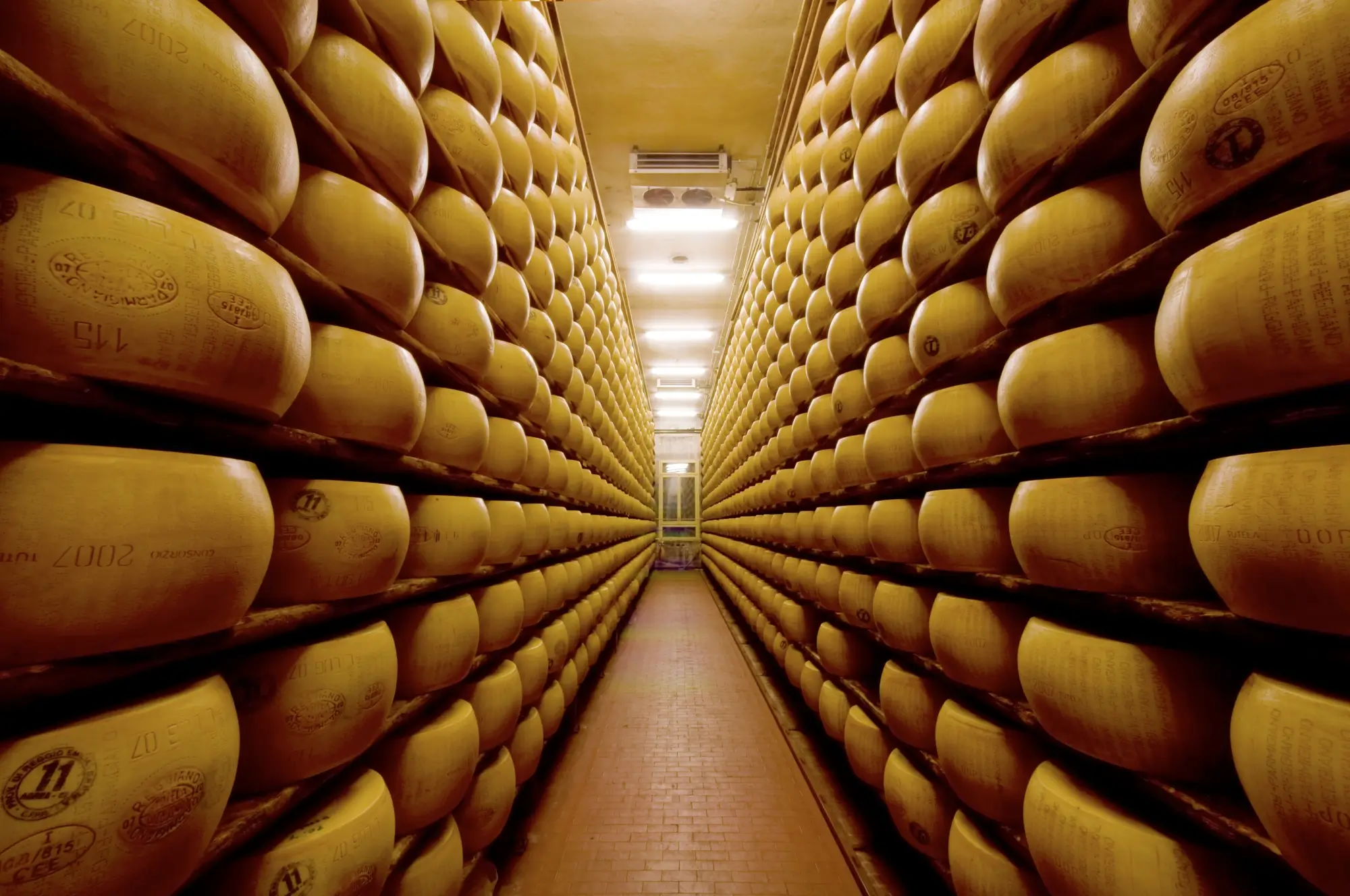
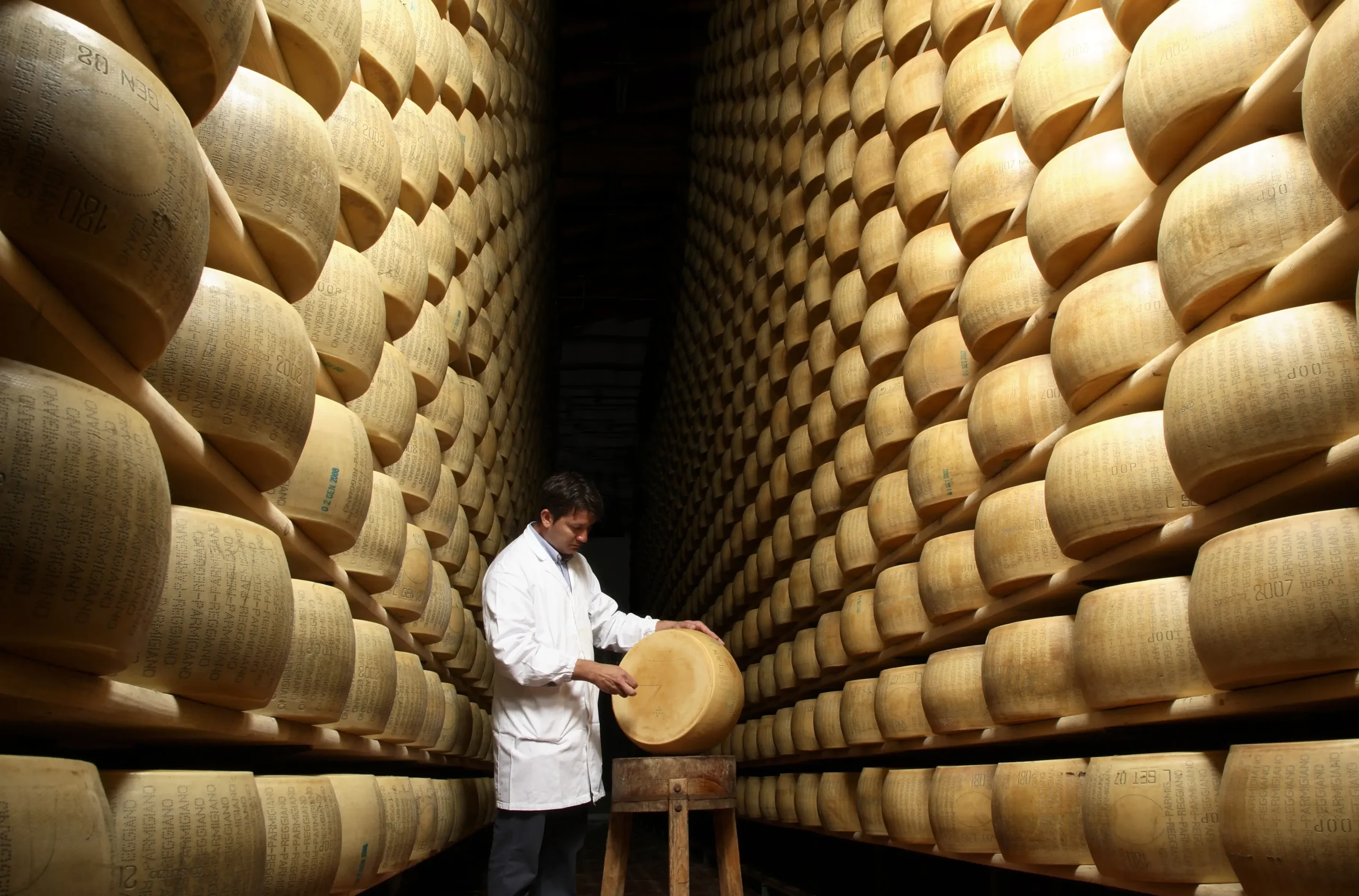
Parmigiano Reggiano requires a minimum aging of 12 months, but the most prized versions reach 24, 36, or even 40 months. The longer it ages, the more granular, intense, and rich in tyrosine it becomes (those small white crystals that crunch under your teeth and that true enthusiasts love).
Grana Padano has a minimum aging of 9 months, with the “Riserva” version exceeding 20 months. The result is generally a milder, sweeter cheese, ideal for those who prefer less intense flavors.
“Tasting a 36-month Parmigiano Reggiano directly in a Food Valley dairy is an experience that redefines the meaning of the word ‘cheese’.”
4.Flavor: How to Tell Them Apart at First Bite
Once in your mouth, the two cheeses tell different stories.
Parmigiano Reggiano is more complex and intense, with almost frosty notes and a long aromatic persistence. It has a more granular and crumbly structure, making it perfect to enjoy in flakes with a drizzle of wildflower honey or traditional balsamic vinegar from Modena.
Grana Padano tends to be softer and creamier, with a less pronounced saltiness. It’s more versatile in the kitchen—excellent grated over pasta and risottos, but less suited for pure tasting.
Traveler’s tip: a live comparative tasting—different aging stages paired with balsamic vinegar and prosciutto—is the fastest (and most enjoyable) way to understand this difference once and for all.
5.Price: Why Is Parmigiano Reggiano More Expensive?
Parmigiano Reggiano generally has a higher price per kilo than Grana Padano, and the reasons are multiple: a restricted production area, stricter regulations, longer aging, and higher production costs.
A whole wheel of Parmigiano Reggiano weighs between 38 and 40 kg and requires about 550 liters of milk to produce. Each wheel is numbered, traceable, and controlled by the Consortium. This isn’t marketing—it’s a guarantee.
Grana Padano, produced in much larger quantities, manages to maintain more competitive prices without sacrificing quality. For everyday use and cooking, it remains an excellent choice.
Which One Should You Choose? (The Not-So-Obvious Answer)
There is no universally “better” cheese—there is the right cheese for the right occasion.
- For pure tasting, paired with honey, nuts, or balsamic vinegar: Parmigiano Reggiano, preferably aged over 24 months.
- For grating over everyday pasta or for a delicate risotto: Grana Padano does an excellent job.
- For a valuable gourmet gift or to truly discover the Food Valley: a whole wheel (or even just a beautiful wedge) of Parmigiano Reggiano bought directly from a dairy is unbeatable.
Where to Taste the Difference: Food Valley Travel Tours
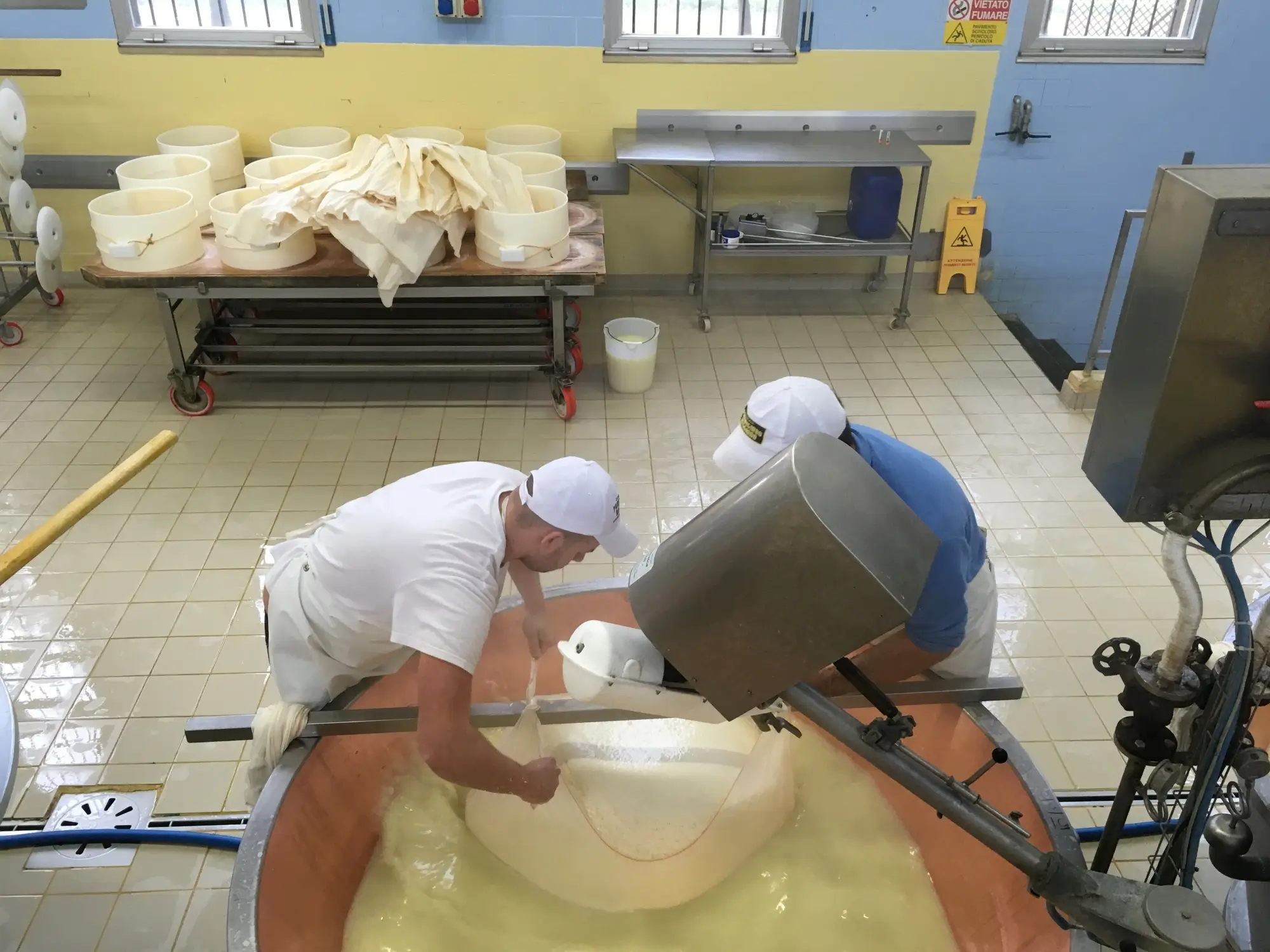
If you’re planning a trip to the Food Valley, the best way to truly understand what sets Parmigiano Reggiano apart from any other cheese is to see it being made with your own eyes—and taste it while still warm. Food Valley Travel organizes tailor-made experiences that take travelers directly into Parmense dairies, with expert guides who turn a visit into a true lesson in gastronomic culture.
Here are the best experiences for those who want to go deeper:
→ Food Valley Gourmet Tour – The Original (Half Day) – guided visit to a Parmigiano Reggiano PDO dairy + ham factory + lunch with local products. The classic option for those who want the best in half a day.
→ Food Valley Gourmet Tour – The Big Fives (Full Immersion Day) – a full day exploring the 5 iconic products of the Food Valley, including Parmigiano Reggiano. For those who don’t want to stop halfway.
→ Parmigiano-Reggiano – The One & Only – an experience entirely dedicated to the King of cheeses, from milk processing to aging rooms. Ideal for true enthusiasts.
“Buying a piece of Parmigiano Reggiano directly at the dairy, still carrying the air of that morning, is one of those souvenirs you won’t find in any duty-free shop.”
Conclusion
The difference between Parmigiano Reggiano and Grana Padano is not about gastronomic snobbery: it’s about culture, territory, and history. They are two Italian excellences with distinct identities that deserve respect—and a conscious tasting.
Next time you’re standing in front of a cheese counter, you’ll know exactly what to do. And if you want to go even deeper, the Food Valley is waiting for you.